


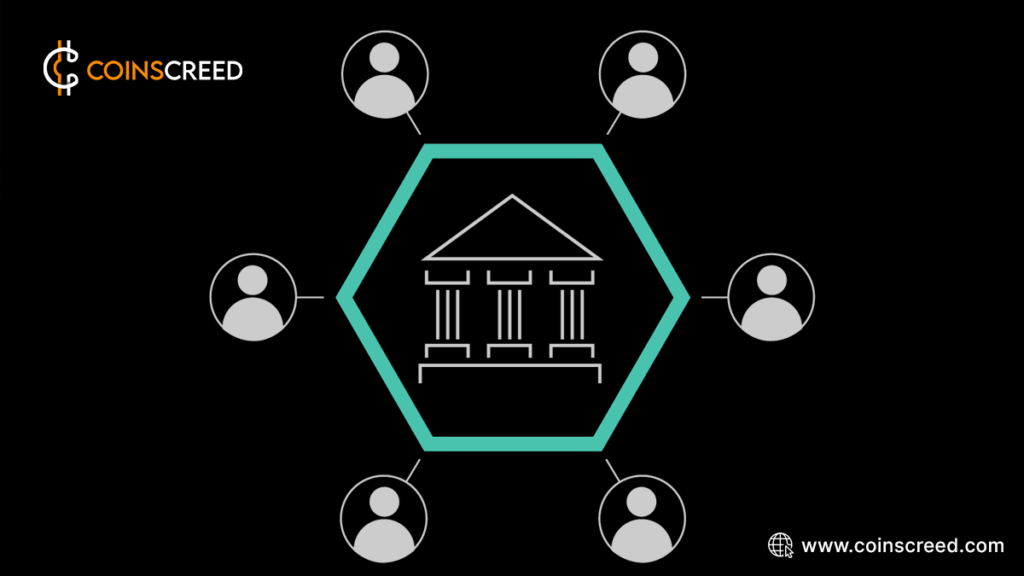
Explore the challenges of integrating traditional finance with DeFi and discover innovative solutions for seamless integration and growth.
The intersection of traditional finance and decentralized finance (DeFi) represents a pivotal point in the evolution of global financial systems. While traditional finance has long been anchored in centralized institutions and regulatory frameworks, DeFi offers a disruptive alternative built on blockchain technology and smart contracts.
Understanding Traditional Finance and DeFi
Traditional finance encompasses the established financial systems, institutions, and instruments that have governed global finance for centuries. These include banks, insurance companies, stock exchanges, and regulatory bodies. TradFi operates on trust, regulation, and intermediaries to ensure the smooth functioning of financial markets.
DeFi, however, utilizes blockchain technology to offer financial services without intermediaries. It provides various services through smart contracts on decentralized platforms, including lending, borrowing, trading, and asset management. DeFi aims to build an open financial system accessible to anyone with an internet connection.
Challenges of Integrating Traditional Finance with DeFi
Integrating traditional finance (TradFi) with decentralized finance (DeFi) involves several challenges, which are:
- Regulatory Uncertainty
- Security Concerns
- Scalability
- User Experience
- Interoperability
Regulatory Uncertainty
One of the foremost challenges is regulatory compliance. Traditional finance operates within strict regulatory frameworks that provide consumer protection, financial stability, and market integrity. DeFi, being relatively nascent and decentralized, poses regulatory clarity and compliance challenges.
Security Concerns
While blockchain technology offers inherent security through cryptography, the DeFi space has been prone to hacks and vulnerabilities in smart contracts. Traditional finance prioritizes security measures that protect against fraud and unauthorized access, which they must reconcile with DeFi’s open and decentralized nature.
Scalability
DeFi platforms often face scalability issues, especially during high transaction volumes. Traditional finance systems are built to handle large-scale transactions efficiently, which poses a challenge when integrating with sometimes slower and less scalable blockchain networks.
User Experience
Traditional financial services are designed with user experience in mind, offering intuitive interfaces and customer support. DeFi platforms, while innovative, can be complex for average users without technical knowledge, hindering mainstream adoption.
Interoperability
Bridging a smooth connection between traditional finance systems and DeFi requires seamless interoperability between protocols, blockchains, and legacy financial infrastructure. Achieving this interoperability while maintaining security and efficiency is a significant challenge.
Solutions to Bridging the Gap Between Traditional Finance with DeFi
Here are some solutions to bridge the gap between traditional finance and DeFi:
- Regulatory Engagement
- Enhanced Security Measures
- Scalability Solutions
- Simplified User Interfaces
- Standardization and Protocol Development
Regulatory Engagement
Collaboration between DeFi projects, regulators, and traditional financial institutions is crucial to establishing clear regulatory frameworks. Initiatives such as regulatory sandboxes can provide a controlled environment for testing new technologies and compliance measures.
Enhanced Security Measures
DeFi platforms must prioritize rigorous security audits of smart contracts and protocols. Integrating traditional cybersecurity practices such as multi-factor authentication and insurance coverage can enhance security and build trust among users.
Scalability Solutions
Research and development efforts to increase blockchain scalability, such as layer two solutions and sharding, are essential. Collaboration with traditional finance’s robust infrastructure can provide insights into scaling solutions that maintain efficiency and reliability.
Simplified User Interfaces
DeFi platforms should invest in user experience design to create intuitive interfaces and educational resources. Integration with traditional financial services, such as fiat gateways and custodial services, can streamline onboarding processes for new users.
Standardization and Protocol Development
Establishing industry standards and protocols for interoperability can facilitate seamless integration between traditional finance and DeFi. Initiatives like cross-chain communication protocols and standardized APIs can promote interoperability while ensuring compatibility and security.
Opportunities of Integrating Traditional Finance with DeFi
Despite the challenges, integrating traditional finance with DeFi presents numerous opportunities that can transform the financial landscape.
- Increased Accessibility and Inclusion
- Enhanced Transparency and Efficiency
- Innovation and New Financial Products
- Liquidity Enhancement
- Global Market Reach
Increased Accessibility and Inclusion
DeFi has the potential to increase financial accessibility and inclusion. DeFi can provide financial services to underserved populations by eliminating intermediaries and reducing transaction costs. Integrating traditional financial assets with DeFi platforms can create more inclusive financial systems.
Enhanced Transparency and Efficiency
Blockchain technology offers unparalleled transparency and efficiency. Transactions recorded on a blockchain are unchangeable and publicly accessible, reducing the risk of fraud and enhancing trust. Traditional financial institutions can leverage this transparency to improve their operations and build customer trust.
Innovation and New Financial Products
The integration of TradFi and DeFi can spur innovation and lead to the development of new financial products. For example, tokenizing traditional assets like stocks and bonds can create new investment opportunities. Hybrid financial products that combine the best of both worlds can offer enhanced features and benefits.
Liquidity Enhancement
DeFi platforms can provide additional liquidity to traditional markets. By tokenizing traditional assets, such as stocks and bonds, and making them available on DeFi platforms, investors can trade them 24/7, increasing market liquidity.
Global Market Reach
DeFi operates globally, enabling cross-border transactions without the complexities and costs that accompany traditional financial systems. It can help traditional financial institutions expand their reach and tap into new markets.
Case Studies of Integrating Traditional Finance with DeFi
Here are notable case studies that illustrate the integration of traditional finance (TradFi) with decentralized finance (DeFi)
Aave and Institutional DeFi
Aave, a leading DeFi lending platform, has launched Aave Arc, a permissioned DeFi platform tailored for institutional investors. Aave Arc integrates KYC/AML compliance while offering the benefits of decentralized finance.
This initiative demonstrates how DeFi can adapt to meet regulatory requirements and attract traditional financial institutions.
Compound Treasury
Compound Treasury, a product of Compound Labs, aims to bridge DeFi and traditional finance by offering a fixed 4% interest rate on USD deposits.

It targets conventional financial institutions and corporate treasuries, providing them access to DeFi yields while ensuring compliance and security.
MakerDAO and Real-World Assets
MakerDAO, the issuer of the DAI stablecoin, is exploring the integration of real-world assets into its collateral pool.

By accepting tokenized real estate, trade receivables, and other traditional assets as collateral, MakerDAO aims to bridge the gap between DeFi and conventional finance, enhancing the stability and utility of its stablecoin.
Conclusion
Integrating traditional finance with DeFi presents both challenges and opportunities. Addressing regulatory, security, interoperability, liquidity, and user experience challenges will be essential for successful integration.
By leveraging technological advancements, fostering collaboration, and providing regulatory clarity, the financial industry can unlock DeFi's transformative potential.
As the integration progresses, it promises to create more accessible, transparent, and innovative financial systems that benefit individuals and institutions alike.
