


In some East Asian countries, stablecoins and cryptocurrencies are beginning to supersede fiat currencies, underscoring their importance in emerging economies.
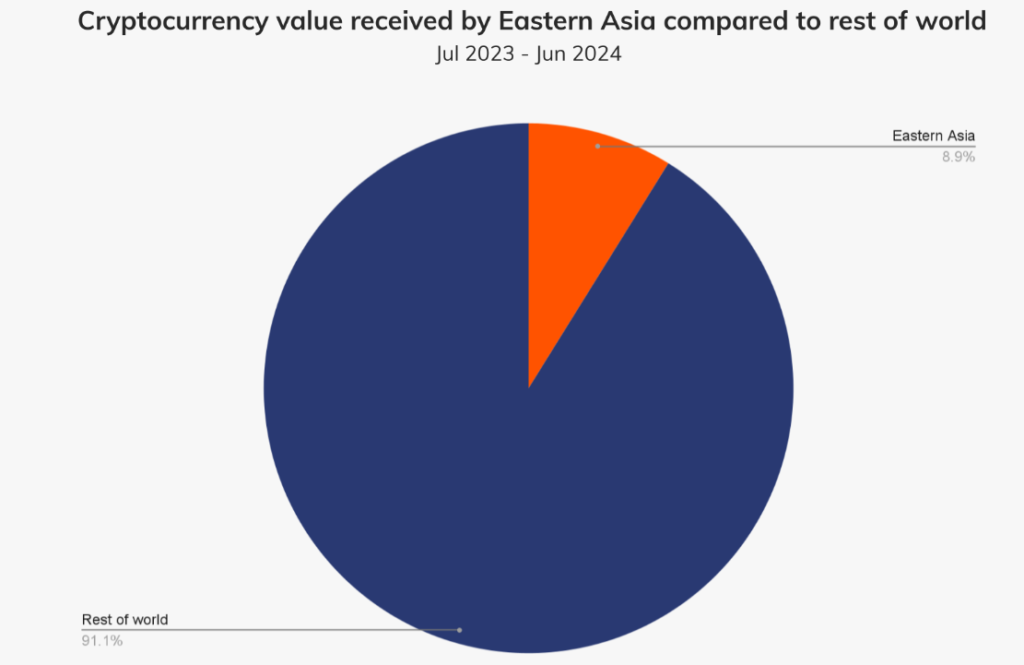
Eastern Asia became the sixth-largest crypto economy in 2024, contributing more than 8.9% of the global cryptocurrency value received between June 2024 and July 2023, according to a report by Chainalysis published on September 17.
According to Maruf Yusupov, the co-founder of Deenar, a digital stablecoin backed by physical gold, the increasing popularity of crypto and stablecoins is partially due to the high inflationary rates and continual devaluation of fiat currencies in countries.
The following is a statement that Yusupov provided to Cointelegraph:
“In most emerging markets, stablecoins are gradually replacing fiat because of lower barriers to entry, low cost, and ease of use. If the current adoption trend is sustained, the asset might fuel lower patronage to traditional banks as we have it today.”
Stablecoins are becoming a more cost-effective and efficient alternative to conventional bank transfers, particularly for cross-border transactions, which can be costly for emerging economies. According to Statista, remittance fees accounted for an average of 7.34% of the cost of transfers in 2024 that involved a bank account transfer.
From June 2024 to July 2023, Eastern Asia earned more than $400 billion in onchain value
Institutional and professional investors push crypto activity in Eastern Asia
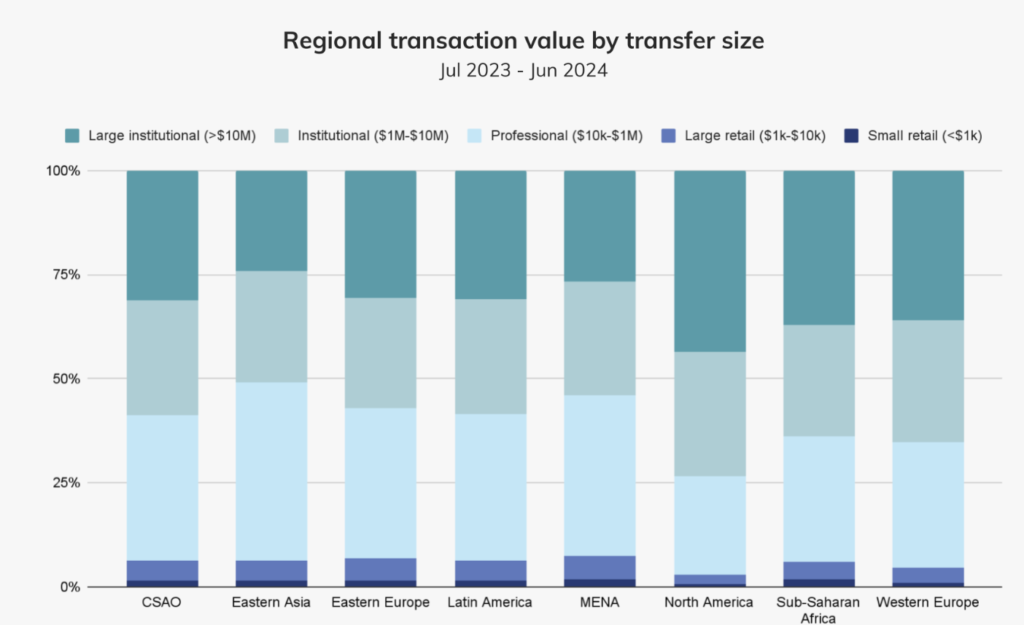
Institutional and professional investors are likely to be the driving force behind most cryptocurrency activity in the East Asian region.
The Chainalysis report, which stated that the average scale of digital asset transfers was substantial, attributed most of the increased activity to institutions.
“Notably, Eastern Asia accounts for the largest share of professional-sized transfers compared to any other region studied in this report.”
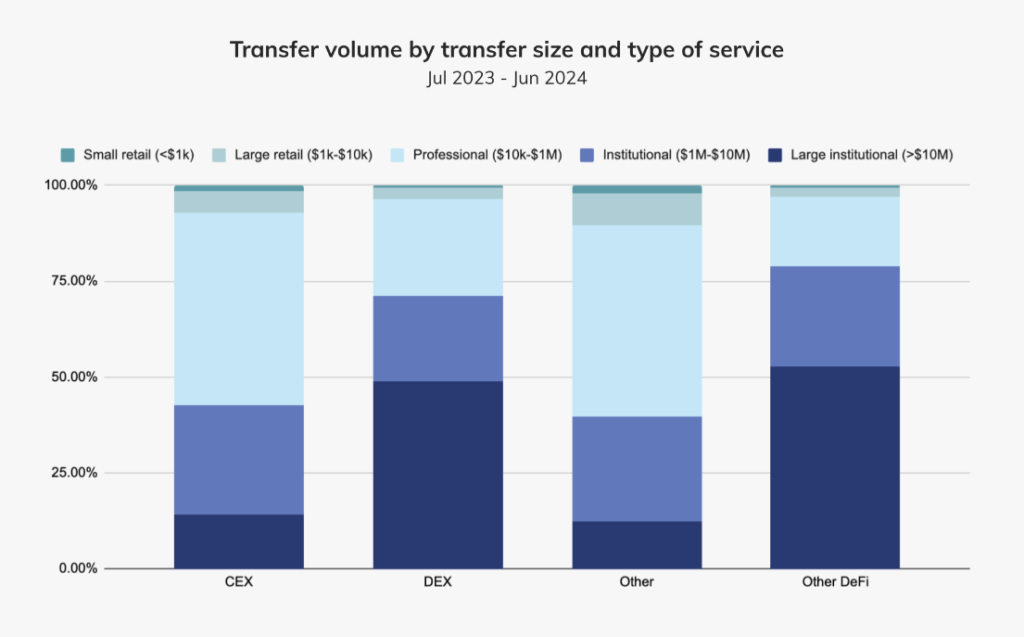
Nevertheless, institutional investors primarily utilized decentralized exchanges (DEXs) and other decentralized finance (DeFi) services, while professional investors continued to prefer centralized exchanges (CEXs).
According to the report, this results from the fact that DEXs generally provide “more arbitrage opportunities than CEXs” due to their diverse asset coverage.
Hong Kong Crypto Hub is becoming a reality
Based on the heightened activity of digital assets in the region, Hong Kong's endeavors to establish itself as a global cryptocurrency center are beginning to bear fruit.
Hong Kong exhibited the most significant year-over-year development in cryptocurrency adoption among Eastern Asian countries, with a growth rate of over 85.6%. South Korea was the second-largest contributor.
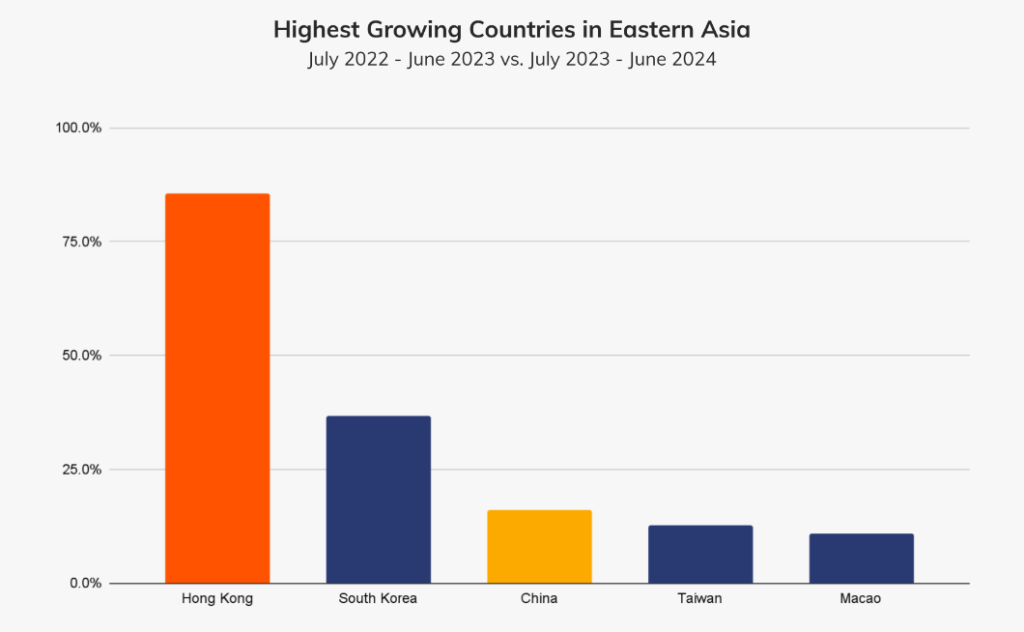
Hong Kong has received over 40% of its total value in stablecoins, a significant factor in this growth.
Nevertheless, Yusupov stated that the increasing prevalence of stablecoins will necessitate additional regulatory supervision.
“Central Banks will do what they can to limit the impact of stablecoins on fiat dominance. Also, new scam models might arise due to the growth in stablecoin usage globally. While innovators are fixated on the revolutionary tendencies of stablecoins, preparation for headwinds must go hand in hand.”
Regulatory advancements may be the cause of the increased activity. Hong Kong's regulators revealed the initial proposal for a new stablecoin licensing regime for fiat-backed stablecoin issuers in July 2024.
