


Tron network fee cut has officially arrived, after TRON’s community of token holders voted to slash transaction fees by 60%.
Announced by founder Justin Sun on August 29, the decision aims to make the blockchain cheaper for users while boosting long-term adoption, even if it reduces short-term profitability.
Why Tron Fees Spiked in the First Place
Tron, the blockchain powering TRX, has long been known for its low-cost transactions, especially for stablecoins like USDT and USDC. However, fees had surged in recent months. According to Token Terminal, average transaction costs hovered around $1.70, and in December peaked at $2.50.
For a network that built its reputation on affordability, this sudden spike raised concerns. It coincided with record stablecoin usage on Tron, which now processes over $82 billion worth of stablecoins, second only to Ethereum’s $148.5 billion.
Rising demand, coupled with TRX price fluctuations and increasing network activity, put upward pressure on fees. Meanwhile, competitors like Solana and even Bitfinex’s new Plasma chain (which offers free USDT transfers) threatened Tron’s dominance in stablecoin payments.
Justin Sun’s 60% Fee Reduction Plan
On social media platform X, Justin Sun framed the fee cut as a rare and bold move:
“For users, this is a real benefit. Cutting fees by 60% is bold and rare for any network. In the short term, Tron’s profitability will be affected. But in the long run, more users and more transactions will improve overall revenue.”
The community’s approval means the reduction is already live, with a new system of quarterly dynamic reviews to adjust fees. These reviews will weigh factors like TRX price, activity levels, and growth to maintain a balance between competitiveness and profitability.
What It Means for Users and the Market
For end users, especially those transacting with USDT and USDC, the Tron network fee cut offers immediate relief. Moving stablecoins across Tron is now significantly cheaper, reinforcing its appeal as the go-to blockchain for payments and cross-border transfers.
For developers, DeFi projects, and exchanges, lower costs could spark higher adoption and transaction volume. Tron already commands nearly 30% of the global stablecoin market share, and cheaper fees may expand that dominance further.
The Risks and Trade-Offs
While lower fees benefit users, they also reduce revenue for the network in the short term. Tron will have to rely on increased transaction volume to offset the drop. If usage fails to scale quickly, profitability could remain under pressure.
Additionally, competitors like Solana and Ethereum continue to innovate with scalability upgrades. Plasma’s entry also raises the stakes, offering zero-cost transfers that could lure away heavy USDT users if Tron cannot maintain its speed advantage.
TRX Price Reaction
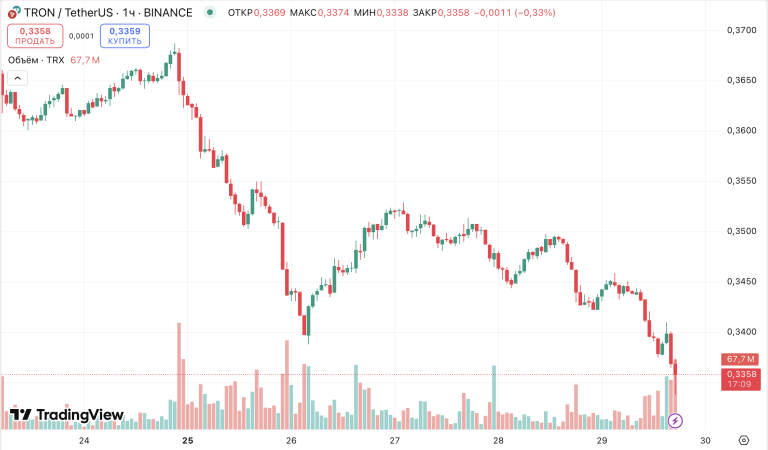
Despite the announcement, TRX price slipped around 2–3%, currently trading at $0.34, according to CoinGecko. Analysts note that while fee cuts usually don’t move token prices immediately, the long-term growth in adoption could strengthen TRX fundamentals.
Looking Ahead
The Tron network fee cut is more than just a cost-saving measure, it’s a strategic bet. By prioritizing user affordability over short-term profit, Justin Sun is doubling down on Tron’s reputation as the blockchain of choice for stablecoins and fast payments.
If transaction volumes rise as expected, the move could pay off handsomely, securing Tron’s role as a major hub for global crypto payments. But if rivals outpace Tron’s innovations, the fee cut may not be enough to hold its market share.
For now, though, one thing is clear: Tron just got a lot cheaper to use.
